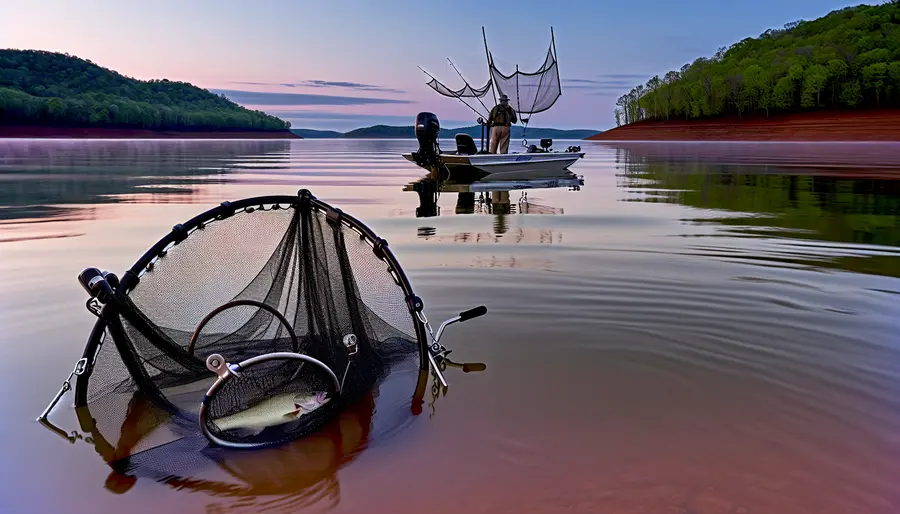
The art of catching fish often hinges on having the best fishing net as much as selecting the perfect rod or lure. Whether angling in a serene lake or facing rough surf, the variety of nets available is vast. Understanding which net fits your locale, target species, and fishing style will enhance your experience and increase your catch rate.
Types of Fishing Nets
When looking for the best fishing net, consider the primary types available, each tailored to specific scenarios and species. Landing nets, cast nets, and dip nets differ significantly in design and purpose. Landing nets are often used from a boat or along the shoreline. They ensure a safe transition from water to hand when reeling in your catch. Cast nets allow you to catch baitfish like shad and herring, making live bait procurement easy. The simplest, dip nets are ideal for scooping up smaller fish and crustaceans from the water surface.
Netting size and material play a crucial role. Large hoop nets with deep mesh pockets are better suited for bulkier fish such as bass and pike. For species like trout, opt for smaller mesh sizes to preserve the fish and increase survival rates upon release. In areas like Lake Michigan with diverse fish species, anglers often carry multiple nets to accommodate various catches.
Net Material and Size Considerations
The material from which the net is made influences its durability and efficacy greatly. Modern nets are primarily made from nylon, rubber, or a combination of both. Nylon nets are lightweight and resist water absorption, making them a practical choice for multi-day trips where weight matters. Rubber nets complement catch-and-release angling; their smooth texture minimizes damage to fish scales and reduces the chance of tangling hooks.
Net size is equally important. Although a larger net might seem better, it’s not always practical. Fishing from a kayak can be cumbersome with a bulky net and may restrict movement. In contrast, on a wide fishing boat on Alabama’s Lake Guntersville, a large hoop can be handy for swiftly netting trophy largemouth bass. Align the net size with your fishing environment and target fish size to find the most suitable option for your needs.
Adaptation to Specific Environments
Durability is key when casting from a rocky outcrop in Yellowstone’s Snake River. A net with an extendable handle can be invaluable, providing essential reach over obstacles and greater control during retrieval in swift currents. For targeting rainbow trout in such challenging waters, choose a rubber net to protect their delicate skin.
In the Gulf of Mexico aboard a charter targeting mahi-mahi or red snapper, a wide-mouthed nylon net helps land these lively fighters. Open water requires strength and reliability, ensuring your net withstands saltwater conditions without corroding or tearing.
Practical Tips and Insights
Experienced anglers know nuanced details define success. A net with a flotation rim is beneficial amid schooling fish, such as bluefish or striped bass congregating in coastal tides. The floating feature prevents the net from sinking if dropped, a common hazard during frenetic activity in hotspots like Cape Cod’s shores.
Consider the collapsibility of the net if mobility and ease of access are important. Telescoping nets fit neatly into backpacks for shore anglers trekking to remote locations, like Canada’s Georgian Bay’s hidden inlets, where diverse fish populate largely undisturbed waters.
Seasonality matters too. During spring spawning runs, steelhead and salmon surge into tributary streams in the Pacific Northwest, requiring nets with longer handles to reach over slick, turbulent waters. A suitable net improves navigation through dense banks and foliage in pursuit of these prized fish.
Maintaining Your Fishing Net
Keeping your chosen net in pristine condition is vital for ongoing success. After each use, especially in saltwater, rinse the net thoroughly to remove salt and grime buildup that degrades materials over time. In brackish or murky waters, use a mild soap spray to remove stubborn debris and ensure longevity.
Regularly inspect for tears or frays in the mesh, which could lead to missed catches. Perform these checks before outings, such as tackling the northeastern striper migration on Narragansett Bay, to ensure equipment reliability when the action peaks.
Choosing the best fishing net involves blending personal preference, specific fishing environment demands, and a clear understanding of the species you pursue. While every angler may have tales of lost catches, the right net can transform your success on the water from chance to certainty. Let this tool enhance your stories of thrilling pursuits and triumphant catches.