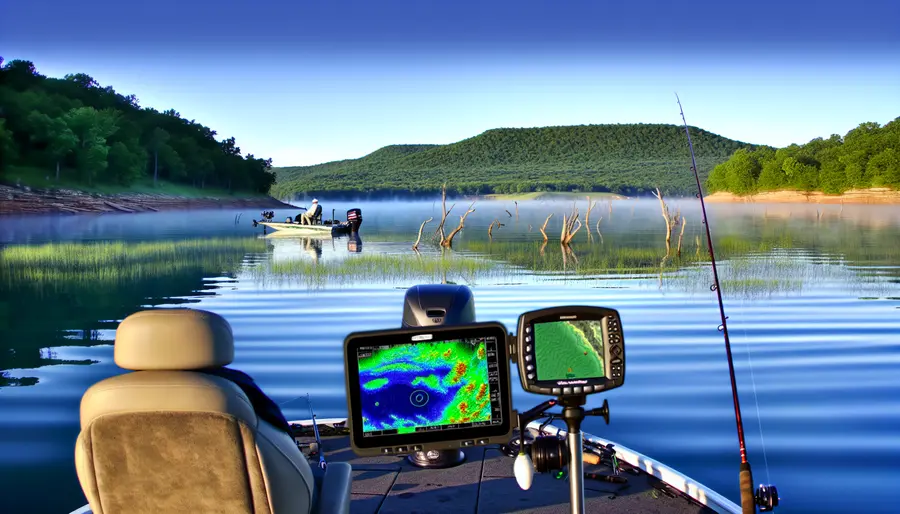
Learning how to read a fish finder can dramatically improve your chances of success in the world of modern angling. A fish finder provides a clearer view of the underwater landscape, revealing structures, fish schools, and terrain types. Understanding this information can elevate you from a beginner to a seasoned angler. This guide will equip you with the essential knowledge to maximize the benefits of your fish finder, whether fishing from a boat, a kayak, or the shoreline.
Understanding Different Types of Fish Finders
Before you learn how to read a fish finder, it’s important to understand the available types. The main types include standalone, combo, and networked units. A standalone fish finder focuses solely on sonar readings. Combo units add GPS navigation, and networked systems can connect with other technology, like radar and autopilot, for larger boats. For beginners or recreational fishers, a combo unit often offers a good balance between functionality and cost.
The frequency of the sonar used by these devices affects how you interpret the information. Dual-frequency fish finders, typically 200 kHz and 83 kHz, are common. Higher frequencies offer greater detail, ideal for shallow water, while lower frequencies penetrate deeper waters effectively. If you plan a trip to expansive lakes like Lake Michigan, using a device with multiple frequency settings can be highly beneficial.
Decoding the Display Screen
Understanding the display is vital in learning how to read a fish finder. Most screens use lines and color to convey information. A thick line at the bottom usually indicates a hard, rocky bed, while a thinner line can signal a soft, muddy, or weed-covered bottom.
Fish appear as arches on the screen. Understanding the ‘arch’ is crucial. As fish swim through the sonar cone, they generate arch shapes. The size and shape of these arches can offer insights into the fish’s size and type. For example, in Bass Lake, larger arches may indicate bass or walleye schools, while smaller blips often signify perch or crappie.
Color schemes vary by model. Devices like the Lowrance HOOK series use colors such as red, yellow, and blue to represent different densities. Dense objects like rocks and large fish return in warmer colors like red and orange, while softer objects like small fish and vegetation appear in blues and greens.
Interpreting Underwater Structures
A key aspect of how to read a fish finder includes understanding underwater structures. Structures like drop-offs, ledges, underwater humps, and sunken objects are prime fish habitats. These are often marked by abrupt changes in bottom composition and depth on your fish finder screen.
The aquatic terrain around Table Rock Lake in Missouri is rich with diverse structures. Interpreting these features accurately enables you to choose strategic locations to fish for species like largemouth bass hiding in submerged brush piles or smallmouth bass near rocky ledges.
Thermoclines, which are layers in the water column with sharp temperature differentials, appear as faint continuous lines. They can indicate fish hovering at particular depths, seeking optimal temperature zones.
Adjusting Settings for Optimal Performance
To get the most out of your fish finder, adjusting settings for different environments is crucial. A key learning in how to read a fish finder involves understanding sensitivity settings and their impact on interpretation.
High sensitivity allows detection of smaller objects and fish but can show more clutter. Lowering sensitivity can clear the display in murky waters. In the Florida Everglades, setting sensitivity appropriately helps differentiate between schools of mullet and lurking tarpon amid the natural clutter.
Zoom features, such as ‘Bottom Lock’ or ‘Fish ID,’ focus on specific water columns or identify individual targets. Adjusting these settings empowers anglers to quickly adapt to different fishing scenarios, enhancing their water adaptability.
Recognizing Seasonal Patterns and Fish Behavior
Fish behavior varies with seasons, and knowing how to read a fish finder helps anticipate these changes. During spring and fall, fish often inhabit shallow waters for spawning or feeding. Conversely, hotter summer months might drive them deeper.
On lakes like Kentucky Lake, predicting seasonal movements allows anglers to target crappie during their spring spawning near submerged timber using sonar images. As the season shifts to summer, those same crappie might retreat to deeper, cooler waters, where a fish finder becomes invaluable for tracking their migration.
By combining fish finder technology with an understanding of fish behaviors and seasonal changes, anglers can enhance their strategies, increasing their chances of landing a trophy catch.
Practical Application and Local Hotspots
Effectively learning how to read a fish finder also involves practical experience and local knowledge. Connecting with local fishing clubs or guides is invaluable. At Florida’s Lake Okeechobee, integrating technology with local expertise can unveil hotspots often overlooked by tourists, such as hidden grasses teeming with fish.
Safety should always be a priority when exploring new waters or unfamiliar areas. Ensure your vessels are equipped with necessary safety gear, such as life vests and communication devices. Modern fish finders often include valuable safety features like GPS mapping and weather updates, providing an additional layer of security.
Ultimately, mastering how to read a fish finder is about combining technology with traditional angling wisdom, allowing anglers to fully exploit modern tools while retaining the spirit of the fishing adventure.