How to String a Fishing Pole: The Essential Skill for Every Angler
Stringing a fishing pole is a fundamental skill every angler must master. Whether you’re a seasoned veteran or a complete novice just starting to explore this timeless pursuit, understanding how to string a fishing pole correctly can transform your fishing experience. As you venture into lakes, rivers, and oceans, setting up your gear with precision lays the groundwork for a successful day on the water. Follow along as we unravel the details of stringing a fishing pole, enriched with seasoned anglers’ insights and expert tips you won’t want to miss.
Understanding the Basics of Fishing Line and Equipment
Before diving into the details of how to string a fishing pole, it’s crucial to understand the types of fishing lines and equipment you’ll be using. Fishing lines come in various types including monofilament, fluorocarbon, and braided, each suited for specific applications. Monofilament is versatile and easy to handle, making it ideal for beginners. Fluorocarbon offers low visibility in water, beneficial in clear, heavily fished areas. Braided lines are durable and offer no stretch, suitable for heavy cover and large fish like northern pike.
Your choice of line depends on your target species and fishing conditions. For light freshwater fishing, such as targeting panfish or trout in local lakes or streams, 6-8 pound test monofilament is typically sufficient. For saltwater fishing or pursuing large species like bass or walleye, lines in the 10-20 pound test range are recommended.
Step-by-Step Guide: How to String a Fishing Pole
Once you’ve selected your line, it’s time to learn how to string a fishing pole. Start by assembling your fishing rod, ensuring all segments are securely joined if using a multi-piece rod. Attach your reel to the rod securely; this connection is vital for accurate casting and efficient fish retrieval.
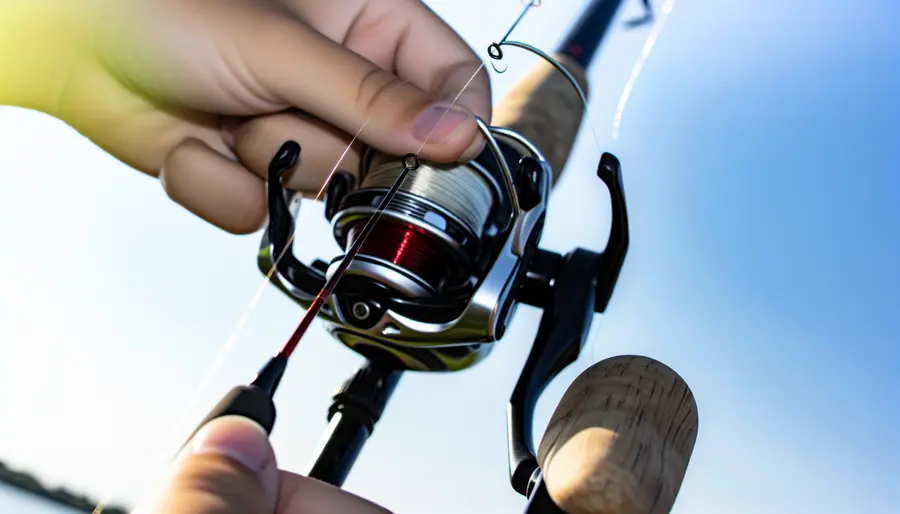
Open the bail of your reel—a crucial step beginners often overlook. Thread the line through the guides on your rod, starting from the guide closest to the reel and working up to the tip. Guides are the metal loops fixed along the length of your rod directing the line.
After threading the line through the rod guides, attach the line to the reel. An insider tip many anglers find helpful: use the Arbor Knot around the spool of your spinning reel for a secure hold. Once secured, slowly close the bail and apply tension on the line by pinching it between your thumb and index finger. Begin reeling the line onto the spool, ensuring it’s winding tightly and evenly.
For baitcasting reels, the process differs slightly. After threading the guides, tie the line directly onto the spool using a Uni Knot, known for its strength and reliability. Maintain tension on the line as you spool it, ensuring it’s level to avoid backlashes—a common baitcasting pitfall.
Refining Your Knot-Tying Techniques
Tying a dependable knot is a crucial fishing skill. The Palomar Knot, favored by bass anglers, is valued for its strength and simplicity. It’s perfect for attaching hooks, lures, and swivels. Here’s a method: double about six inches of line, pass the looped end through the eye of your hook, tie an overhand knot with the tag end and loop, then pass the hook through the loop. Moisten the knot before tightening it to ensure security.
Fly fishing enthusiasts benefit from mastering the Double Surgeon’s Knot for tying two lines of similar diameter, such as leader to tippet material. It’s a compact knot retaining nearly 100% of the line’s strength.
Leveraging Local Wisdom and Reading Water
Knowing how to string a fishing pole is just the start; understanding local conditions elevates your fishing game. Different water bodies require unique approaches. In the clear waters of Montana’s Yellowstone River, stealth and natural presentations are key. Using a lighter line paired with naturally colored lures or flies can yield great results with wary trout.
Similarly, reading water conditions is crucial. In murky waters with low visibility, like the Mississippi River during a rainstorm, brightly colored lures on a heavier line can attract fish more effectively. The time of year also significantly affects fish behavior. In spring, bass move into shallow areas for spawning, making it ideal for fishing around structures like docks and submerged trees.
Ensuring Safety and Environmental Stewardship
Fishing isn’t just about catching fish; it’s about embracing the entire experience responsibly. Always wear a life jacket when fishing from a boat or kayak and be aware of weather forecasts to avoid sudden storms. Practicing catch and release in overfished or sensitive habitats ensures fish populations endure.
Be mindful of your fishing line residue; monofilament’s versatility can lead to it littering waters and shorelines since it doesn’t biodegrade. Always take line clippings with you and dispose of them properly. Many tackle shops and environmental organizations offer recycling bins for used lines.
As you become adept at how to string a fishing pole, remember that each outing is a chance to learn and connect with nature. The more you know about fish patterns, the tools of the trade, and local insights, the more meaningful your excursions will be. So head out, gear up with confidence, and relish the age-old thrill of fishing, knowing you’re equipped for success on the water.