Fly fishing trips for beginners provide a unique connection to nature that few other activities can match. When the mist lingers over the water and the world awakens in soft hues, it’s these moments that make fly fishing special. For those new to this timeless tradition, starting your journey can be both exhilarating and a bit daunting. This guide aims to make your first cast as smooth as a ripple on a calm stream.
Getting the Right Gear for Your Fly Fishing Trip
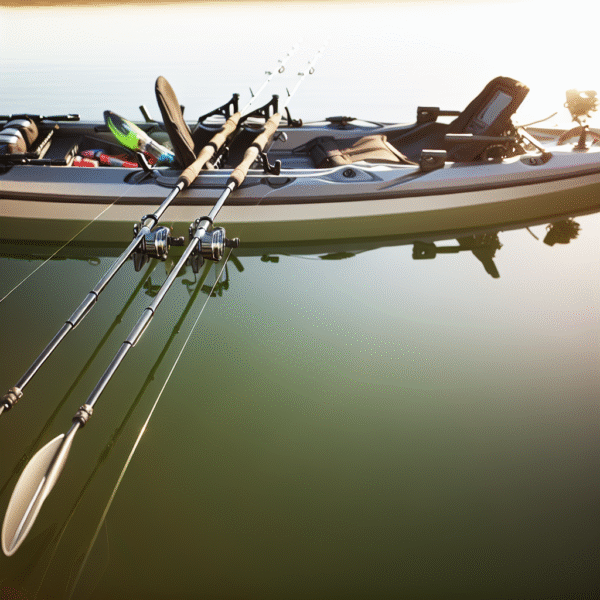
Embarking on your fly fishing adventure begins with selecting the right equipment. Understanding the basic gear is crucial for successful fly fishing trips for beginners. A balanced fly rod and reel setup tailored to your targeted fishery—whether it’s trout in a mountain stream or bass in a lake—is fundamental. A 5-weight rod is a versatile choice for most beginner scenarios.
Your line, leader, and tippet are equally important. As a beginner, opt for a floating line, which is easier to manage and suitable for various conditions. A tapered leader of 9 feet is a recommended start to present your fly naturally. Don’t forget your flies—the art of fly selection. Basic patterns like the Woolly Bugger and Adams dry fly can imitate a wide range of aquatic creatures.
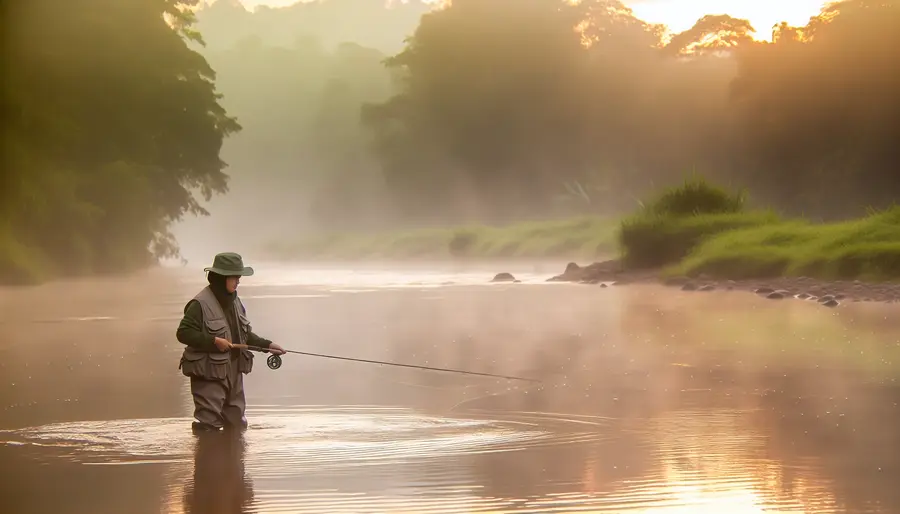
Waders and wading boots assist in reaching beyond the shoreline. Choose breathable materials for comfort and mobility. Basic accessories such as a fly box, forceps, nippers, and a net complete your kit, preparing you for a successful day on the water.
Finding the Right Location
The success of fly fishing trips for beginners often depends on selecting the right location. Fortunately, there are accessible spots across the country. In the West, consider the legendary waters of Montana’s Madison River or Colorado’s South Platte. Alternatively, the Catskills in New York and Pennsylvania’s Spring Creek offer Eastern anglers rich opportunities to hone their skills.
Research local fishing reports before heading out and consult nearby fly shops. They provide invaluable information about current conditions, hatch patterns, and local regulations. Seasonal patterns affect fish behavior dramatically with water temperature and flow fluctuations.
Consider the time of year as well. Early summer coincides with prolific insect hatches and active fish, while fall provides striking scenery and aggressive feeders. Select locations that match your expertise level and comfort, allowing room for growth.
Reading Water and Understanding Fish Behavior
An important skill for fly fishing trips for beginners is the ability to read water and understand fish behavior. Fish often reside where current, depth, and structures like rocks or submerged logs offer protective cover and access to food. Look for currents meeting slower water where fish wait for meals.
Observe the water for signs of life, like rising fish indicating a hatch. If fish aren’t visible, try deeper water where they might seek safety from predators and temperature extremes. Understanding what fish feed on is critical. Observe the insects near the water and match your fly selection accordingly.
Effective Techniques for Beginners
Mastering casting basics is essential for any fly fishing trip. Begin with the classic overhead cast, using a 10 to 2 casting motion, with pauses to load the line on both back and forward casts. Practice on grass or a pond to develop muscle memory and confidence.
Try the roll cast, especially around tight spots. Instead of lifting the line, the roll cast uses water tension to propel the fly forward, which is invaluable in bushy streams. As you grow comfortable, explore the reach cast and mend for advanced line control.
Start with shorter casts to gain precision, gradually extending your reach as accuracy improves. Consider indicator rigs in slower currents or nymphing techniques for reaching fish subsurface. Each technique encourages problem-solving and adaptability to conditions.
Safety Tips and Ethical Considerations
Fly fishing, like any outdoor activity, involves safety concerns and ethical responsibilities. Always wear a life jacket when wading deep waters or in a boat. Stay alert to weather changes that can cause dangerous currents or lightning hazards.
Practice catch-and-release fishing where appropriate, using barbless hooks to minimize fish harm. Wet your hands before handling fish, keeping them in the water while removing hooks to ensure their survival. Picking up discarded lines and trash keeps the area clean for everyone.
Respect local regulations and obtain necessary permits. Responsible engagement helps preserve these environments for future fly fishing trips for beginners and seasoned anglers alike.
Fly fishing trips for beginners offer an unparalleled opportunity to immerse oneself in nature’s serenity and thrill. Armed with the right gear, techniques, and respect for the water, beginners can explore new waters with confidence. Remember, every cast is a step toward becoming more in tune with the rhythms of the water and the treasures it holds. Tight lines, and may your adventures be as vast and enriching as the waters you explore.